
The Power of Storytelling for Emotional Growth in Children

Updated: 24 hours ago

Most children already know something adults sometimes forget about stories:
A good story can feel real while we're inside it.
Children can worry with a character, laugh with them, wonder what they might do next, and recognize pieces of their own experiences along the way.
Research on narrative transportation describes how becoming absorbed in a story can involve attention, imagery, and emotional engagement (Green & Brock, 2000).
That makes storytelling more than entertainment. Stories can give children a gentle way to explore feelings, thoughts, mistakes, uncertainty, and difficult moments without having to begin by talking directly about themselves.
Over time, these shared experiences can become one of many everyday ways children build emotional awareness, flexibility, and resilience.
Why Stories Help Kids Understand Their Emotions
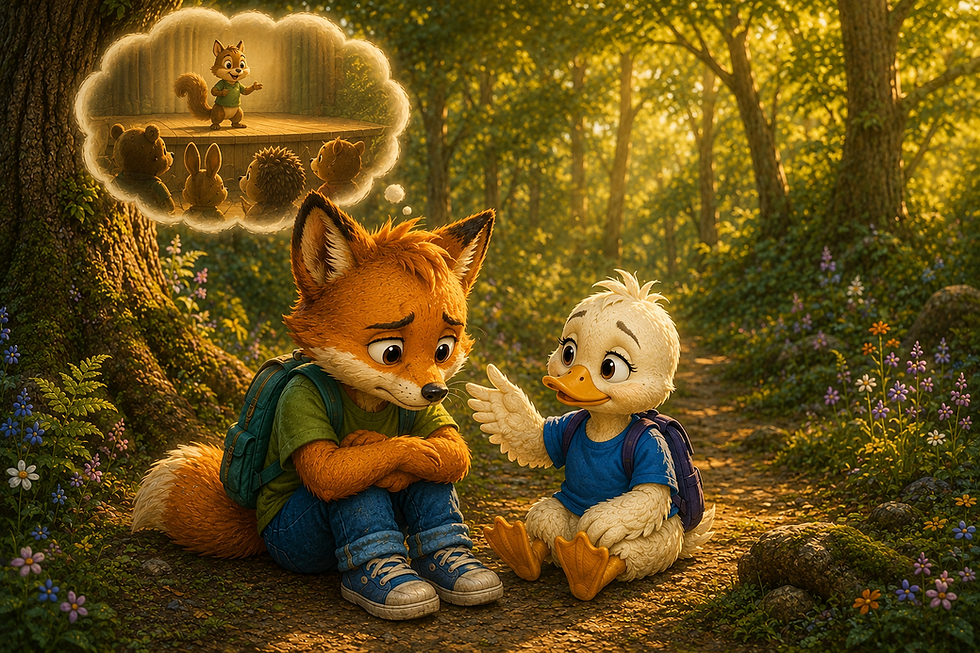
Big emotions can be confusing for kids. Stories give children some distance from those experiences.
They can notice a character feeling afraid, frustrated, disappointed, or sad before having to talk about those feelings in themselves.
Sometimes it is simply easier to say:
“Finn looks embarrassed.”
than:
“I felt embarrassed.”
That little bit of distance can make curiosity easier.
Research on affect labeling has found that putting emotional experiences into words can reduce emotional reactivity (Lieberman et al., 2007). Shared reading can create natural opportunities for children and grown-ups to talk about characters' emotions, thoughts, and experiences together.
A parent might wonder:
“What do you think Finn was feeling there?”
“What do you think he wanted to do?”
“Have you ever felt something like that?”
The goal isn't to find the right answer.
The story gives families something they can explore together.
Using Stories to Practice Mindful Noticing
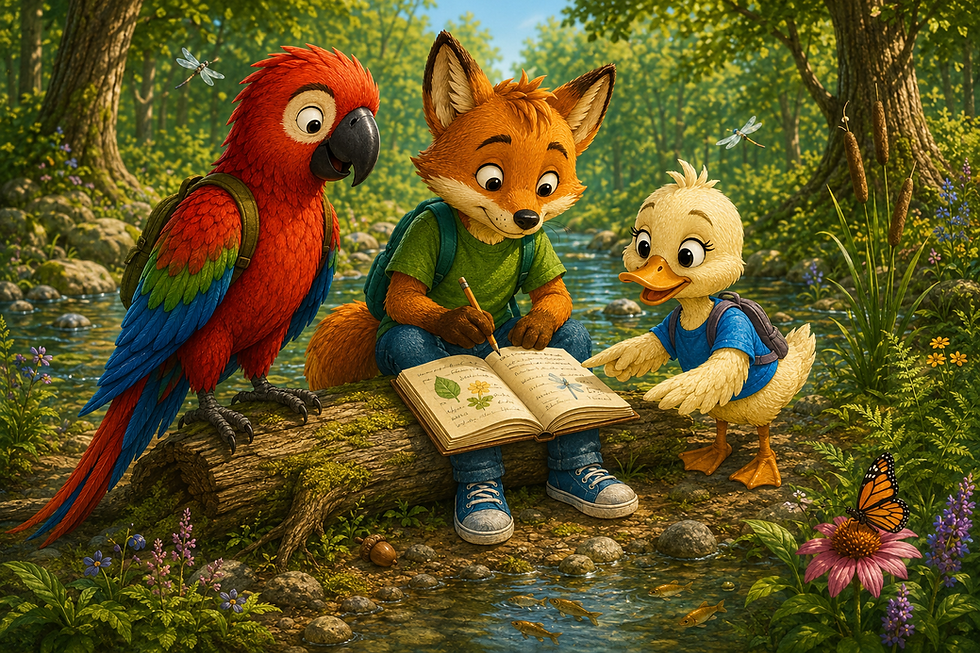
Mindfulness doesn't have to begin with sitting quietly or practicing a formal exercise.
A story naturally asks children to pay attention.
What changed?
What did the character notice?
What might they be feeling?
What is happening right now?
The attention and emotional engagement involved in becoming absorbed in a story are part of what researchers have described as narrative transportation (Green & Brock, 2000).
Parents can occasionally pause during a story and wonder about what is happening with their child.
That shared noticing can turn an ordinary story into a simple opportunity to practice attention and curiosity.
Helping Kids "Unstick" from
Thoughts with Storytelling

Some thoughts can feel especially convincing to children:
“Everyone will laugh at me.”
“I can't do this.”
“It's going to happen again.”
Stories allow children to watch another character have thoughts like these without automatically treating those thoughts as instructions for what must happen next.
In Acceptance and Commitment Therapy (ACT), cognitive defusion involves changing how we relate to thoughts rather than eliminating or arguing with them (Hayes, Strosahl, & Wilson, 1999).
A story can make that idea much more concrete for a child.
A character can have a worried or discouraging thought—
and the story can continue.
The thought can come along without deciding everything that happens next.
Interactive Storytelling:
Bringing Emotional Regulation to Life

Stories don't have to be passive experiences.
Children can predict what happens next.
Act out a scene.
Imagine a different choice.
Draw what a character might be feeling.
Or wonder what they themselves might do.
Shared reading also gives parents and children opportunities to talk about characters' emotions and mental states, conversations that have been associated with children's developing social understanding and social-emotional competence (Council on Early Childhood et al., 2024).
There doesn't need to be a hidden correct answer.
The value can simply be in:
wondering together.
That turns storytime into something shared between the child and the grown-up—and gives children opportunities to explore emotions, choices, and different possibilities through conversation and play.
How Storytelling Supports Emotional Growth in Children
One of the most useful things about stories is that they can create a bridge between a character's experience and a child's own life.
A child might recognize disappointment in Finn before talking about their own disappointment.
They might notice a character trying again and remember a time when returning felt difficult for them too.
They might watch a character carry an uncomfortable feeling while still choosing what to do next.
Parents don't have to force those connections.
Sometimes storytelling simply opens the door for emotional growth in children.
And when a child does make a connection, the conversation can become less about teaching a lesson and more about becoming curious together.
Conclusion: Turning Stories into Emotional Growth
The best stories don't need to end with a perfect lesson.
Sometimes their value comes from what happens afterward:
A question.
A connection.
A child recognizing themselves in a character.
A conversation that might not have happened otherwise.
Storytelling gives children a way to explore thoughts, feelings, choices, and difficult experiences with a little bit of distance—and with a supportive grown-up nearby.
Over time, those small moments of noticing, wondering, and talking together can become part of how children learn about themselves and the world around them.
Continue the Story at Acceptance Acres™
If you'd like to experience this kind of storytelling with your child, The Return is the first story in the Acceptance Acres Reflection Series™.
Finn the Fox is excited to spend time with his friends—but an unexpected and embarrassing moment leaves him wondering whether he wants to go back at all.
The story explores a challenge many children experience:
How do we return after something difficult happens?
Rather than giving children one perfect answer, The Return invites kids and grown-ups to explore Finn's experience together through the story, reflection questions, parent-child discussion prompts, and a simple Return Plan.
The Return: Helping Children Return After Difficult Moments is a 23-page digital story and reflection resource for children ages 5–10 and their grown-ups.
Want to learn more about why I created stories this way? You can also read How Stories Help Children Build Emotional Resilience, where I share the thinking behind the Acceptance Acres Reflection Series™.
References & Suggested Reading
Council on Early Childhood, et al. (2024). Literacy promotion: An essential component of primary care pediatric practice: Technical report. Pediatrics, 154(6), Literacy Promotion: An Essential Component of Primary Care Pediatric Practice — Technical Report.
Green, M. C., & Brock, T. C. (2000). The role of transportation in the persuasiveness of public narratives. Journal of Personality and Social Psychology, 79(5), 701–721.
Hayes, S. C., Strosahl, K. D., & Wilson, K. G. (1999). Acceptance and Commitment Therapy: An experiential approach to behavior change. Guilford Press.
Lieberman, M. D., et al. (2007). Putting feelings into words: Affect labeling disrupts amygdala activity in response to affective stimuli. Psychological Science, 18(5), 421–428.



Comments