
How Stories Help Children Build Emotional Resilience

Why I Created the Acceptance Acres Reflection Series™

There are moments in childhood that stay with us.
Not because they were extraordinary, but because they felt deeply personal.
Missing the winning shot.
Walking into the wrong classroom.
Being left out at recess.
Making a mistake in front of classmates.
Wanting to quit after something embarrassing happened.
Most adults can still remember moments like these years later. And perhaps that shouldn't surprise us. Childhood is filled with first experiences.
Our first disappointment.
Our first real friendship.
Our first failure.
Our first time something doesn't go according to plan.
As adults, we naturally want to help children through these moments. We explain. We reassure. We solve problems. We encourage them to keep trying.
Sometimes, those things help.
But over the years, both as a therapist and as someone who has spent countless hours talking with children and families, I've come to believe something else matters too.
Sometimes children don't need another explanation or piece of advice.
Sometimes they simply need a different way of seeing their own experience.
That belief eventually became the foundation for The Acceptance Acres Reflection Series™.
Children Don't Always Need Another Lesson
There are countless wonderful children's books that teach valuable lessons.
Stories about kindness or honesty.
Stories about sharing or courage.
Many social-emotional learning books also help children identify emotions and introduce useful coping strategies.
These books serve an important purpose. And I myself have created, and will continue to create, similar resources.
But while working with children, I noticed something interesting.
Children have rarely remembered an entire list of strategies or concepts I taught them.
What they remembered were stories.
A child might not perfectly remember the phrase "psychological flexibility."
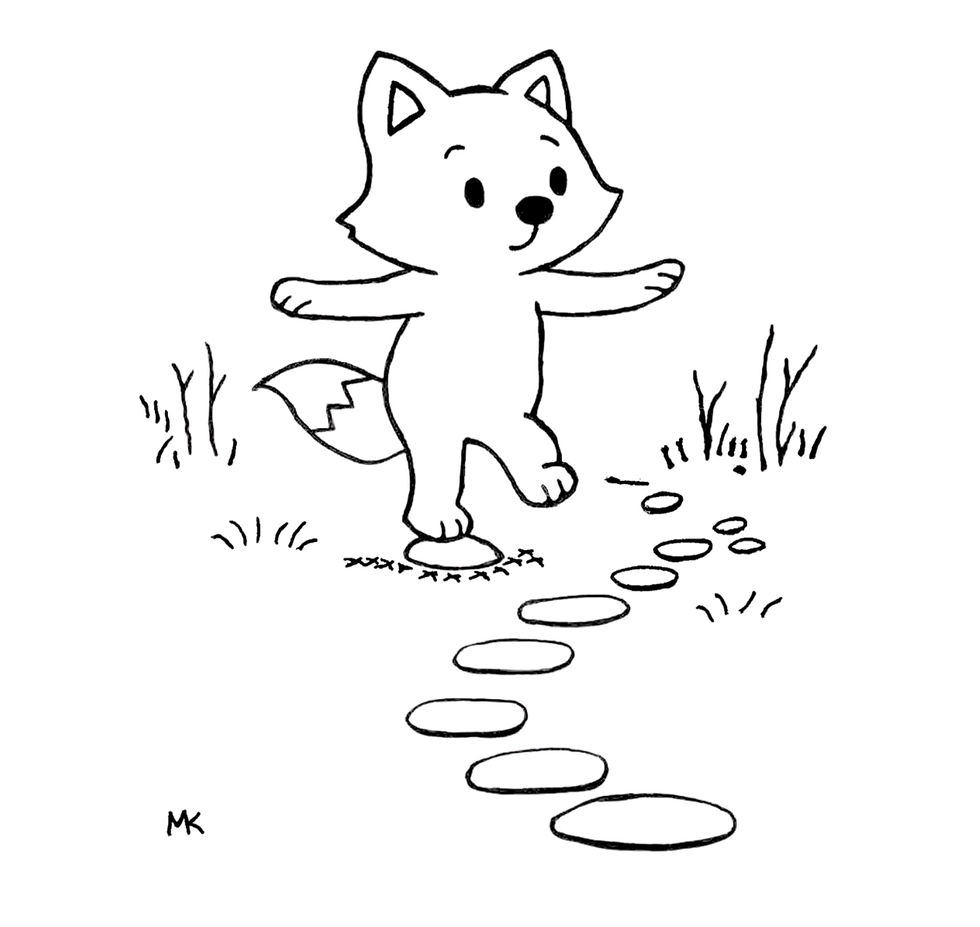
But they remember the fox who chose to come back.
They remember the duck who stayed beside her friend.
They remember the squirrel who kept trying.
Stories have a way of staying with us because they allow us to experience an idea rather than simply hear it.
Instead of being told what courage looks like, we watch someone discover it.
Instead of being instructed how to respond to disappointment, we quietly wonder what we might have done if we had been there ourselves.
That wondering matters.
Because curiosity often creates space for growth in ways instruction alone cannot.
Children don't always need another lesson.
Sometimes they simply need a gentle way to look at what they're already experiencing.
Stories Help Children Build Emotional Resilience
One of the remarkable things about stories is that they allow children to experience difficult situations while remaining emotionally safe.
Within the pages of a book, disappointment can be explored without becoming overwhelming.
Embarrassment can be observed without feeling unbearable.
Mistakes become something we watch unfold rather than something happening directly to us.
This emotional distance is surprisingly powerful. Therefore, this is one potential way that stories help children build emotional resilience.
Children often recognize themselves in a character before they're ready to talk about themselves.
It can feel much easier to say, "I think Finn was embarrassed," than, "I felt embarrassed today."
That small difference opens a door.
The conversation no longer feels like an interview.
It becomes a shared exploration.
Parents are no longer trying to pull thoughts out of their child.
Instead, both people become curious together:
"What do you think was happening?"
"Why do you think he made that choice?"
"Have you ever felt something like that?"
There are no perfect answers.
Only opportunities to notice.
Stories Become Shared Experiences
From the beginning, I never imagined The Acceptance Acres Reflection Series™ as a collection of books that children would simply finish and place back on a shelf.
I hoped they would become experiences families could return to together.
That is why every Reflection Series story ends with discussion questions and a simple reflection activity.
The story is not meant to end on the final page.
In many ways, it begins there.
The questions are intentionally open.
Not because there is a single correct lesson hidden in the story.
But because every child brings different experiences to it.
A seven-year-old may notice something entirely different than a ten-year-old.
A child who has recently experienced disappointment may connect with different moments than one who has just started a new school.
Even the same child may discover something new after reading the story again months later.
That is one of the beautiful things about reflection.
As children grow, the conversation grows with them.
The story remains the same.
The reader changes.
And that changes everything.
Quietly Guided by Psychological Flexibility
The Reflection Series is quietly inspired by principles from Acceptance and Commitment Therapy (ACT), a well-established approach that helps people develop psychological flexibility.
Psychological flexibility is the ability to remain present with difficult thoughts, emotions, and experiences while continuing to move toward what matters.
That doesn't mean pretending difficult feelings don't exist.
It doesn't mean becoming fearless.
And it certainly doesn't mean always feeling confident before taking action.
Instead, it recognizes something many of us eventually learn through experience.
Life includes disappointment.
Embarrassment.
Mistakes.
Uncertainty.
Loss.
Fear.
The goal is not to eliminate these experiences.
The goal is to help children discover that they can continue growing even when these unpleasant experiences are present.
Rather than building stories around perfect solutions, I wanted to create stories that reflected real life.
Stories where difficult moments aren't erased.
Stories where characters don't suddenly become fearless.
Stories where courage sometimes looks very ordinary.
A quiet breath.
A small decision.
A return.
Why The Return Became the First Story
When I began planning the Reflection Series, one idea kept returning to me.
Children often leave after difficult moments.
They leave the soccer field after missing a kick.
They stop raising their hand after answering incorrectly.
They avoid a friend after an awkward conversation.
They refuse to try something again after failing once.
As adults, we naturally focus on helping children through the difficult moment itself.
But I began wondering about something that happens afterward.
Coming back.
Returning to the classroom.
Returning to the friendship.
Returning to practice.
Returning to the game.
Returning to the conversation.
Returning to ourselves.
Sometimes the difficult moment lasts only a few minutes.
The decision to return may take much longer.
That became the heartbeat of The Return.
Finn the Fox excitedly heads to play baseball with his friends, only to discover they have decided to practice soccer instead. Already feeling uncertain, he is accidentally hit in the face by a soccer ball and runs home hurt and embarrassed.
Rather than immediately solving the problem for him, Finn's mom creates space for him to settle, reflect, and decide what matters most. Finn realizes he still wants to spend time with his friends. His fear and embarrassment have not completely disappeared, but they no longer get to make the decision for him.
In the end, he chooses to return.
The story is not really about soccer.
Or baseball.
Or even embarrassment.
It is about something many children experience but rarely talk about.
How do we go back after something difficult happens?
Looking Beyond One Story
Although The Return is the first book in the Acceptance Acres Reflection Series™, it is only the beginning.
Every child will encounter different challenges as they grow.
Friendships will change.
Mistakes will happen.
Confidence will come and go.
New experiences will bring excitement, uncertainty, disappointment, and joy.
My hope is that this series grows alongside children.
Not by providing every answer.
But by offering new ways to pause, notice, reflect, and begin meaningful conversations together.
Some stories may explore belonging.
Others may explore kindness, grief, courage, values, flexibility, or change.
Each one will begin in the same place.
With a real-life moment.
Because growth often begins there.
Not in extraordinary events.
But in the quiet moments that every child eventually experiences.
The Hope Behind the Reflection Series
If there is one hope I have for the Acceptance Acres Reflection Series™, it is not that children finish each story having learned a particular lesson.
It is that they finish each story feeling a little more curious.
Curious about themselves.
Curious about others.
Curious about the thoughts and feelings that make us human.
Because curiosity creates space.
Space to notice, reflect, and choose.
And perhaps most importantly, space to discover that difficult moments do not have to become the end of our story.
Sometimes they become the place where growth quietly begins.
Frequently Asked Questions
What is the Acceptance Acres Reflection Series™?
The Acceptance Acres Reflection Series™ is a collection of children's stories designed to help families explore real-life experiences through gentle storytelling, reflection questions, and simple discussion activities. Rather than teaching children one "correct" lesson, each story encourages curiosity, meaningful conversations, and emotional growth.
What age is the Reflection Series for?
The stories are generally written for children ages 5–10, although many families find that older siblings and adults also enjoy the conversations the books inspire. Because each child brings different life experiences to a story, the reflections often deepen as children grow.
Is the Reflection Series based on Acceptance and Commitment Therapy (ACT)?
Yes. The stories are inspired by principles from Acceptance and Commitment Therapy (ACT), a well-researched approach that helps people develop psychological flexibility. The books translate these ideas into child-friendly stories without using clinical language, making them accessible for families to enjoy together.
Do children need to read the books in order?
No. Each story will stand on its own and explore a different real-life experience. While The Return is the first book in the series, future stories can be enjoyed independently.
How can parents use these stories at home?
Families can simply enjoy the story together, then use the reflection questions and discussion activities at the end of each book to continue the conversation. Many parents find that children naturally begin connecting the characters' experiences to their own lives, creating opportunities for meaningful discussions without pressure.
What is The Return about again?
The Return is the first book in the Acceptance Acres Reflection Series™. It explores what it can feel like to return after disappointment, embarrassment, or other difficult moments and includes reflection questions and a simple activity for families to complete together.
Continue Exploring
If you enjoyed learning about the philosophy behind the Acceptance Acres Reflection Series™, you may also enjoy exploring these additional resources:
Read The Return — The first story in the Acceptance Acres Reflection Series™, exploring what it means to come back after difficult moments.
Explore the Steady Steps™ Blog Series — Practical, therapist-informed articles that help parents support children's emotional growth through everyday experiences.
Discover Free Child & Parent Resources — Download practical tools and guides designed to support emotional awareness, flexibility, and resilience at home.
Whether you're reading a story together, having a conversation after a difficult day, or taking one small step forward as a family, I hope these resources help create moments of connection that children carry with them long after the page is turned.
📌 Follow Along for More Therapist-Led Support
If you found this helpful, you can follow Mindful Living Resources™ on Instagram for daily, ACT-informed guidance for parents of kids who get stuck in worry, perfectionism, big feelings, or “I can’t” loops.
We share:
Therapist reflections from real sessions
Nervous-system explanations in parent language
Small-step scripts for hard moments
Research-informed parenting insights
Gentle emotional-skills stories for kids
You can find us on Instagram at @MindfulLivingResources.


Comments